 How Social Vulnerability Shapes Healthcare Disaster Preparedness in Southern Arizona
Executive Summary
Social vulnerability encompasses the socioeconomic, demographic, and structural factors that influence a community’s ability to prepare for, respond to, and recover from disasters. These factors include poverty, age, disability, housing type, language proficiency, and access to transportation and technology. These factors can magnify the effects of hazards and impede recovery efforts, especially for populations exposed to higher levels or an unequal distribution of these factors.
Understanding social vulnerability helps identify where disaster impacts may be uneven and where mitigation and preparedness efforts are most needed. For healthcare systems, this information can guide equitable, community-specific responses that protect those at greatest risk and strengthen resilience during emergencies.
This white paper evaluates how social vulnerability factors can inform disaster preparedness among healthcare facilities and their surrounding communities in Southern Arizona. The region warrants particular attention because of its proximity to the U.S.–Mexico border, widespread rural and tribal communities, desert climate, and ongoing drought conditions. Its healthcare delivery system also faces persistent workforce shortages, resource limitations, and health disparities, particularly among rural, tribal, and low-income populations.
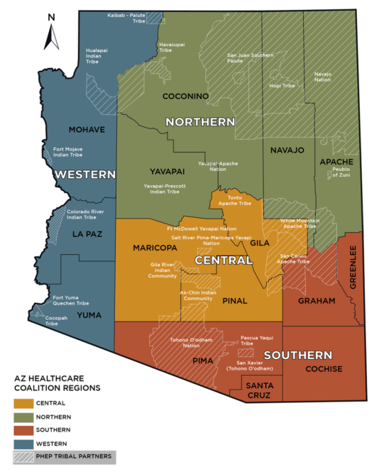
Figure 1: Map of Southern Arizona counties and tribes (AzCHER, 2020).
About Our Research
The analysis draws on survey data collected from 54 healthcare organizations across Southern Arizona between October and December 2023. The facilities were classified as rural or urban to capture differences in hazard risk and preparedness across the region.
The facility-level survey data were combined with federal and state community data on factors such as poverty, age, disability, language, and housing characteristics. Together, these data provide a detailed view of how social vulnerability intersects with disaster preparedness and help identify the hazards and preparedness gaps most relevant to Southern Arizona communities.
Key Findings
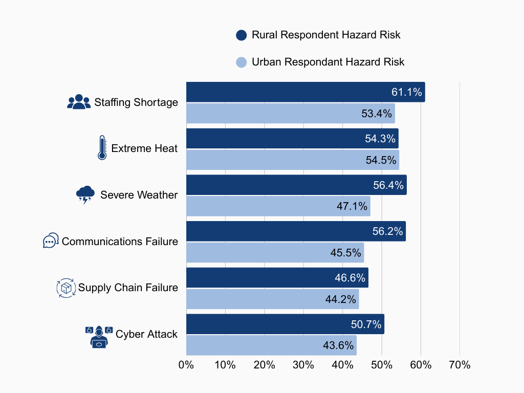
Surveyed healthcare organizations identified staffing shortages, extreme heat, severe weather, communication/network failures, and cyberattacks as the most significant hazards facing both rural and urban healthcare delivery systems.
The most severe hazard with the highest chance of occurring in rural healthcare communities is Staffing Shortage (61.1%) while the most severe hazard with the highest chance of occurring in urban healthcare communities is Extreme Heat (54.5%) (See Figure 2).
Figure 2: Hazard risk reported by rural and urban healthcare facilities in Southern Arizona.
According to Southern Arizona-specific social vulnerability data, rural facilities serve populations with higher rates of poverty, more residents living in mobile homes, limited access to healthcare infrastructure, and longer travel distances to care. These communities also have higher proportions of children and more limited access to technology, such as smartphones.
Urban facilities serve populations with higher concentrations of older adults, denser housing, significant pockets of linguistic diversity, and higher rates of disability and crowding. Both rural and urban healthcare locations display high vulnerability in areas such as socioeconomic status, minority status, housing and transportation barriers, and health insurance gaps, although the patterns and combinations of vulnerability factors vary by setting.
Preparedness strategies also differ by setting. Rural areas often depend on mobile units, neighbor checks, and telemedicine, while urban systems focus on surge capacity, multilingual communication, and scalable infrastructure, such as cooling centers during heat events. Both settings face challenges in workforce recruitment, supply chain reliability, and maintaining communication during disasters.
Recommendations for Healthcare
- Promote Emergency Preparedness to Leadership: Continue advocating for resource allocation, leadership engagement, and recognition of preparedness activities as critical elements of a successful organization.
- Tailor Preparedness to Vulnerabilities: Use local data to guide facility and community-specific interventions, addressing heat vulnerability, aging population needs, language access, and technology gaps.
- Integrate Social Vulnerability Data into Planning: Use validated social vulnerability indicators and hazard risk assessment tools to continuously assess risk and monitor program effectiveness in a structured approach.
- Plan for Hazard-Specific Needs: Address challenges associated with top-ranked hazards through targeted investments in infrastructure, technology, community engagement, and cross-sector collaboration.
The disaster preparedness of Southern Arizona’s healthcare facilities and their surrounding communities is inextricably linked to underlying social vulnerability factors. Rural and urban areas face distinct challenges, but both require active, locally informed strategies to strengthen resilience in the face of increasingly frequent and severe disasters. By understanding community-specific vulnerabilities and adapting preparedness activities accordingly, leaders and partners across the state can build more equitable, responsive, and effective healthcare emergency systems, for Southern Arizona.